Source refillable toner cartridge for HP, Toshiba, and Office Printers
Compare 27 options for refillable toner cartridge including models like 19A, 219A, and T-4530. Buyers can evaluate features such as Grade A quality, OEM compatibility, and delivery times from Chinese manufacturers.
Key considerations
Products List



Comprehensive Sourcing Guide
Strategic Sourcing Guide for Refillable Toner Cartridges
Understanding Technical Specifications and Compatibility
When sourcing refillable toner cartridges, the primary objective is to identify components that offer a balance between original equipment manufacturer (OEM) precision and third-party adaptability. The market for these units is defined by specific technical attributes that dictate their performance in laser printing environments. Buyers must scrutinize the model numbers and physical dimensions to ensure seamless integration with existing printer fleets. The available data indicates a diverse range of model identifiers, including specific series such as 19A, 219A, 76A, and the CE285A/85A series. These designations often correspond to specific printer architectures, such as the HP Laserjet series, requiring precise matching to avoid mechanical failure or error codes.
Physical specifications are equally critical. The structural integrity of a refillable cartridge depends on its dimensions, particularly the outer diameter and length. Observed specifications in the current market include outer diameters of 2.5 inches and 4.5 inches, with lengths typically available in 10-inch and 20-inch configurations. These variations suggest that the product line supports both compact desktop units and larger industrial drum assemblies. Furthermore, the internal composition of the cartridge plays a vital role in longevity. The filtration grade is identified as a "PRE Filter," constructed from Polypropylene (PP) material. This material choice is standard for its chemical resistance and durability in high-heat environments. The cage material is also noted as Polypropylene, providing a robust frame for the internal components.
Compatibility is a multifaceted attribute in this sector. Listings frequently describe products as "Compatible," "Original," or "Re-Manufactured." This distinction is crucial for procurement strategy. A "Compatible" unit implies a third-party design that mimics OEM specifications, while "Re-Manufactured" suggests a used OEM shell that has been restored. The data also highlights specific applications for different printer brands, such as the Toshiba E-Studio 255/305/355/455 series. For these specific models, the toner loaded is specified as 675g, utilizing Refill Powder sourced from Tomoegawa Japan. This level of detail regarding the powder source indicates a supply chain that prioritizes high-quality raw materials to ensure print density and consistency.
Compliance, Certification, and Quality Standards
In the B2B procurement landscape, verifying compliance and certification is not merely a formality but a risk mitigation strategy. The supply chain for refillable toner cartridges must adhere to recognized quality management systems to ensure consistency across batches. The provided data explicitly mentions ISO9001 certification, a standard that validates a supplier's ability to maintain consistent quality in their manufacturing and assembly processes. Buyers should treat this certification as a baseline requirement, verifying that the specific lot or batch they are purchasing is covered under an active ISO9001 framework.
Quality grading is another essential metric for evaluation. The market data references "Grade A" as a standard classification for these products. This designation typically implies that the product meets the highest tier of performance expectations for third-party consumables, offering a replacement ratio of 1:1 with OEM standards. However, the term "Grade A" is an internal classification and should be corroborated with independent test results or warranty terms. The warranty periods observed in the current listings vary, with some products offering a 1-year warranty and others extending coverage to within 24 months. This variance suggests that the warranty duration is often a function of the specific product model or the confidence the supplier has in their re-manufacturing process.
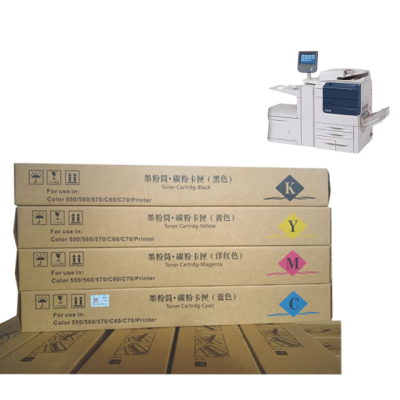
Color specifications also play a role in compliance and application. While many cartridges are black, the data indicates availability in Cyan (C), Yellow (Y), and Magenta (M) variants. For color printing applications, the consistency of these colors is paramount. The presence of "Oat Brand Package" and "Neutral Package" options in the data suggests that suppliers offer different packaging tiers, which may correlate with the level of branding and quality assurance provided. Buyers must ensure that the packaging protects the cartridge from environmental factors such as humidity and static electricity, which can degrade the toner powder before use.
Cost Drivers and Pricing Dynamics
The pricing structure for refillable toner cartridges is influenced by a complex interplay of factors, including material costs, labor for re-manufacturing, and the specific model complexity. The observed price range in the market spans from $1 to $180,000 USD. This extreme variance indicates that the category encompasses everything from simple, low-cost replacement filters to high-value industrial drum assemblies or complete printer component suites. For the specific context of refillable toner cartridges, the lower end of this spectrum likely represents individual components or small-batch re-manufactured units, while the higher end may reflect bulk industrial orders or specialized high-yield models.
The Minimum Order Quantity (MOQ) is a significant cost driver. The data shows an MOQ range from 1 piece to 500 pieces. A low MOQ of 1 piece allows for small-scale testing and procurement flexibility, which is ideal for businesses with sporadic printing needs or those evaluating new suppliers. Conversely, an MOQ of 500 pieces suggests a focus on bulk industrial supply, where economies of scale can significantly reduce the unit cost. Buyers must calculate the total cost of ownership, which includes not only the unit price but also the cost of meeting the MOQ. Ordering 500 units when only 100 are needed may tie up capital and increase storage costs, negating the per-unit savings.
Shipping and logistics also contribute to the final cost. The available shipping methods include Air Cargo, Sea Cargo, and Express delivery. Air cargo and express services offer faster lead times, typically 3 to 5 workdays as noted in the data, but come at a premium. Sea cargo is more cost-effective for large volumes but involves longer transit times. The origin of the products, primarily from regions such as Zhejiang, Shenzhen, and Xiamen in China, influences these logistics costs. Buyers should factor in the distance and shipping method when budgeting, especially for time-sensitive procurement needs.
Typical Applications and Usage Scenarios
Refillable toner cartridges serve a wide array of applications, ranging from small office environments to large-scale industrial printing operations. The versatility of these products is evident in their diverse usage classifications. The data lists applications for both "Liquid Filter" and "Dust Filter" contexts, although the primary focus for toner cartridges is on the latter in the context of laser printing. The specific mention of "OPC Drum" and "Integration" suggests that these components are often part of a larger system where the drum unit and the toner cartridge work in tandem.
For office environments, the compatibility with popular printer brands like HP is a key application driver. The "HP Laserjet" designation indicates that these cartridges are designed to fit the vast ecosystem of HP printers, making them a popular choice for businesses looking to reduce operational costs. The "Regular" specification suggests that these are standard yield cartridges suitable for general office use. However, for high-volume environments, the availability of specific models like the T-4530 for Toshiba E-Studio series printers indicates that specialized solutions exist for enterprise-grade equipment.
The "Re-Manufactured" feature highlights a specific application scenario where sustainability and cost reduction are prioritized. In this context, used OEM shells are cleaned, refilled with high-quality powder (such as the Tomoegawa Japan powder mentioned), and tested to ensure they perform like new. This approach is particularly relevant for organizations with strong environmental, social, and governance (ESG) goals, as it reduces electronic waste. The "1:1 Replacement" attribute ensures that these re-manufactured units can be used as direct substitutes for original parts, minimizing the need for retraining staff or altering workflow processes.
Supplier Evaluation and Sourcing Strategy
Evaluating suppliers for refillable toner cartridges requires a rigorous approach that goes beyond simple price comparison. Buyers should prioritize suppliers who demonstrate transparency in their manufacturing and sourcing processes. The presence of specific origin locations, such as Zhejiang, Shenzhen, and Xiamen, Fujian Province, provides a geographical context for the supply chain. While these regions are known for manufacturing, buyers must verify that the specific supplier operates within these locations and adheres to local and international regulations.
Certification status is a primary filter for supplier evaluation. The ISO9001 certification mentioned in the data serves as a benchmark for quality management. Buyers should request proof of this certification and verify its validity with the issuing body. Additionally, the "Grade A" standard and the "1 Year" or "24 Months" warranty terms provide insight into the supplier's confidence in their product. A supplier offering a longer warranty period may be more reliable, as they are willing to stand behind the longevity of their re-manufactured units.
The customization options available are another indicator of supplier capability. The data notes that "Customization" is available, which implies that suppliers can tailor products to specific client needs. This could include custom packaging, specific model modifications, or branding. Buyers should assess the supplier's ability to handle these custom requests without compromising quality or lead times. The "Individual Poly Bag and Box" or "Original Packing & Netural Packing" options suggest flexibility in packaging, which can be important for branding or logistics efficiency.
Quality Control and Long-Term Procurement Considerations
Maintaining consistent quality in refillable toner cartridges is essential for the long-term success of procurement strategies. The data highlights several quality control indicators, such as the use of specific materials like Polypropylene for the cage and filtration grade, and the use of high-quality refill powder from Tomoegawa Japan. These material choices are critical for preventing issues such as toner clumping, poor print quality, or damage to the printer drum. Buyers should insist on quality control protocols that verify these material specifications for every batch received.
The "Replacement: 1:1" attribute is a strong indicator of quality control, suggesting that the product is designed to be a direct functional equivalent to the original. However, buyers should not rely solely on this claim. Implementing a sample testing protocol before placing large orders is a prudent measure. This involves testing a small batch of cartridges in the actual printer environment to verify print quality, page yield, and mechanical fit. The "Warrenty" (Warranty) terms, ranging from 1 to 24 months, should be clearly understood and included in the procurement contract. A robust warranty provides a safety net against defects and ensures that the supplier is accountable for the product's performance.
Long-term procurement considerations also involve the stability of the supply chain. The lead time of 3 to 5 workdays is a significant advantage for businesses that require rapid replenishment. However, buyers should assess the supplier's capacity to handle demand spikes and their ability to maintain consistent quality over time. The "Feature: Compatible, Original, Re-Manufactured" classification suggests a diverse product portfolio, which can be beneficial for suppliers looking to adapt to changing market demands. Buyers should evaluate the supplier's ability to provide a consistent supply of high-quality products over the long term, ensuring that their printing operations are not disrupted by supply chain issues.
Comparative Analysis of Product Attributes
To facilitate informed decision-making, the following table summarizes key attributes observed in the current market for refillable toner cartridges. This comparison highlights the variability in specifications, origins, and features that buyers must consider.
| Attribute Category | Specific Observations | Procurement Implication |
|---|---|---|
| Model Compatibility | 19A, 219A, 76A, CE285A/85A, T-4530, Crg725 | Must match specific printer models (e.g., HP, Toshiba) to ensure fit. |
| Material Composition | PP (Polypropylene), Polyurathane Foam, EPDM Gasket | PP offers durability; EPDM ensures sealing; Foam aids filtration. |
| Dimensions | Outer Diameter: 2.5", 4.5"; Length: 10", 20" | Critical for physical fit within printer chassis. |
| Quality Grade | Grade A, Standard, Regular | "Grade A" implies high performance; verify with warranty terms. |
| Origin Locations | Zhejiang, Shenzhen, Xiamen (China) | Indicates manufacturing hubs; verify specific factory certifications. |
| Warranty Period | 1 Year, Within 24 Months | Longer warranty suggests higher confidence in product longevity. |
| Packaging Options | Individual Poly Bag, Box, Oat Brand, Neutral, OEM | Affects branding, storage, and logistics efficiency. |
| Refill Material | Tomoegawa Japan Powder (for specific models) | High-quality powder source ensures better print density. |
| MOQ Range | 1 PCS to 500 | Low MOQ allows testing; high MOQ reduces unit cost. |
| Lead Time | 3 to 5 Workdays | Fast delivery supports just-in-time inventory strategies. |
This comparative analysis underscores the importance of aligning specific product attributes with organizational needs. By carefully evaluating these factors, buyers can optimize their procurement strategy for refillable toner cartridges, ensuring cost-effectiveness, reliability, and operational continuity.
FAQs
What certifications do refillable toner cartridge suppliers hold?
Suppliers typically hold ISO9001 certification to validate quality management systems. This standard ensures consistent manufacturing and assembly processes for the cartridges, providing a baseline for reliability in B2B procurement.
Which materials are used for the cartridge cage and filtration?
The cage material is Polypropylene, and the filtration grade is a PRE Filter made from PP. These materials offer chemical resistance and durability suitable for high-heat environments in laser printing applications.
Can I find cartridges with specific lead times for urgent orders?
Yes, delivery times of 3 to 5 workdays are available for specific models. This fast lead time supports urgent procurement needs when combined with air cargo or express shipping methods from Chinese origins.
What is the minimum order quantity for these refillable units?
The minimum order quantity ranges from 1 piece to 500 pieces depending on the supplier. A low MOQ of 1 allows for testing, while higher volumes may offer better economies of scale for bulk industrial supply.
Which printer brands are compatible with these refillable cartridges?
These cartridges are compatible with HP Laserjet printers and Toshiba E-Studio series models like 255 and 305. Specific models such as 19A and CE285A are designed for seamless integration with these fleets.
What warranty periods are offered for Grade A quality cartridges?
Warranty periods vary between 1 year and within 24 months based on the product model. Grade A classification implies high performance, and the warranty duration reflects the supplier's confidence in the re-manufacturing process.